

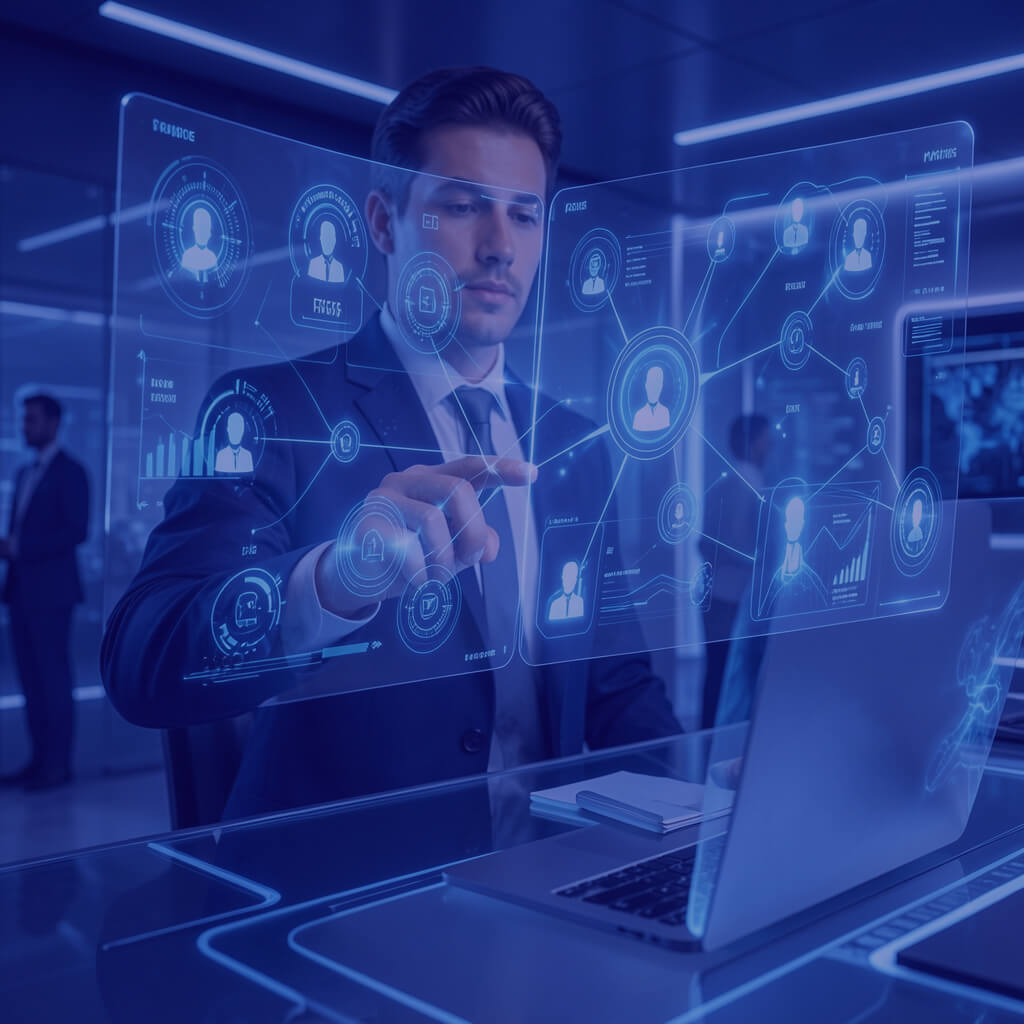
Digital marketing is undergoing a profound transformation. By 2026, martech tools and artificial intelligence are no longer mere gadgets, but strategic levers that enable businesses to better understand their customers, personalize their actions, and make more effective decisions. However, true innovation lies not only in the technology itself, but also in how these tools are used to create an authentic human experience.
This article explores the key martech trends of April 2026, demonstrating how businesses can combine technology, data, and human connection to achieve better results.
I. AI in Strategic Marketing
a. Intelligent Automation
Artificial intelligence is now capable of automating much more than sending newsletters or writing content. Modern systems analyze massive amounts of data, identify complex customer behaviors, and adjust campaigns in real time.
For example, some martech platforms can detect when a customer is hesitating between two products and automatically trigger a personalized offer to encourage them to complete their purchase. Other systems optimize advertising budgets by shifting resources to the highest-performing channels, without human intervention.
This intelligent automation allows marketing teams to focus on strategy and creativity, rather than repetitive tasks. It transforms the role of the marketer: from a simple executor, they become a strategist capable of overseeing the entire customer journey.
b. Autonomous Agents and the Customer Journey
Another major innovation of 2026 is the emergence of autonomous AI agents. These virtual assistants can interact with users, offer personalized recommendations, and even make purchases on their behalf.
These agents are changing the traditional customer journey. Marketers must now anticipate not only the needs of humans, but also those of the intelligent systems that make decisions for them. This means rethinking content, offers, and touchpoints so that every interaction, whether human or automated, remains consistent and effective.
The stakes are high: brands that can adapt to this new reality will have a significant advantage, as they will be visible and relevant not only to customers but also to the systems that influence their choices.
II. Humanization and Data Leverage
a. Human Connection at the Heart of Marketing
Despite all the technological advancements, the human element remains essential in marketing. Consumers expect authentic interactions, whether it’s product advice, after-sales service, or personalized communication.
By 2026, the most successful companies will be those that use technology to amplify human connection, rather than replace it. For example, an automated chat can handle simple questions, but human intervention remains essential for complex or sensitive situations. This combination allows for increased efficiency while preserving customer trust and satisfaction.
b. Leveraging Data Strategically
Data is now at the heart of marketing. But its value lies not in quantity, but in its strategic use. Modern martech platforms integrate predictive models that enable understanding behaviors, granular audience segmentation, and the personalization of every interaction.
Thanks to these tools, marketers can anticipate needs, offer tailored solutions, and precisely measure the impact of each action. This approach not only optimizes return on investment but also improves the customer experience by avoiding generic or intrusive messages.
Conclusion
By April 2026, marketing is no longer limited to the implementation of advanced technologies. It’s about combining innovation, data analysis, and human authenticity. Artificial intelligence and autonomous agents offer unprecedented possibilities, but their effectiveness depends on how they are integrated into a comprehensive, customer-centric strategy.
The companies that will succeed will be those that know how to use technology to strengthen human relationships, anticipate consumer needs, and create personalized and relevant experiences. More than ever, effective marketing in 2026 relies on a delicate balance between technology and human interaction, strategy and creativity.