

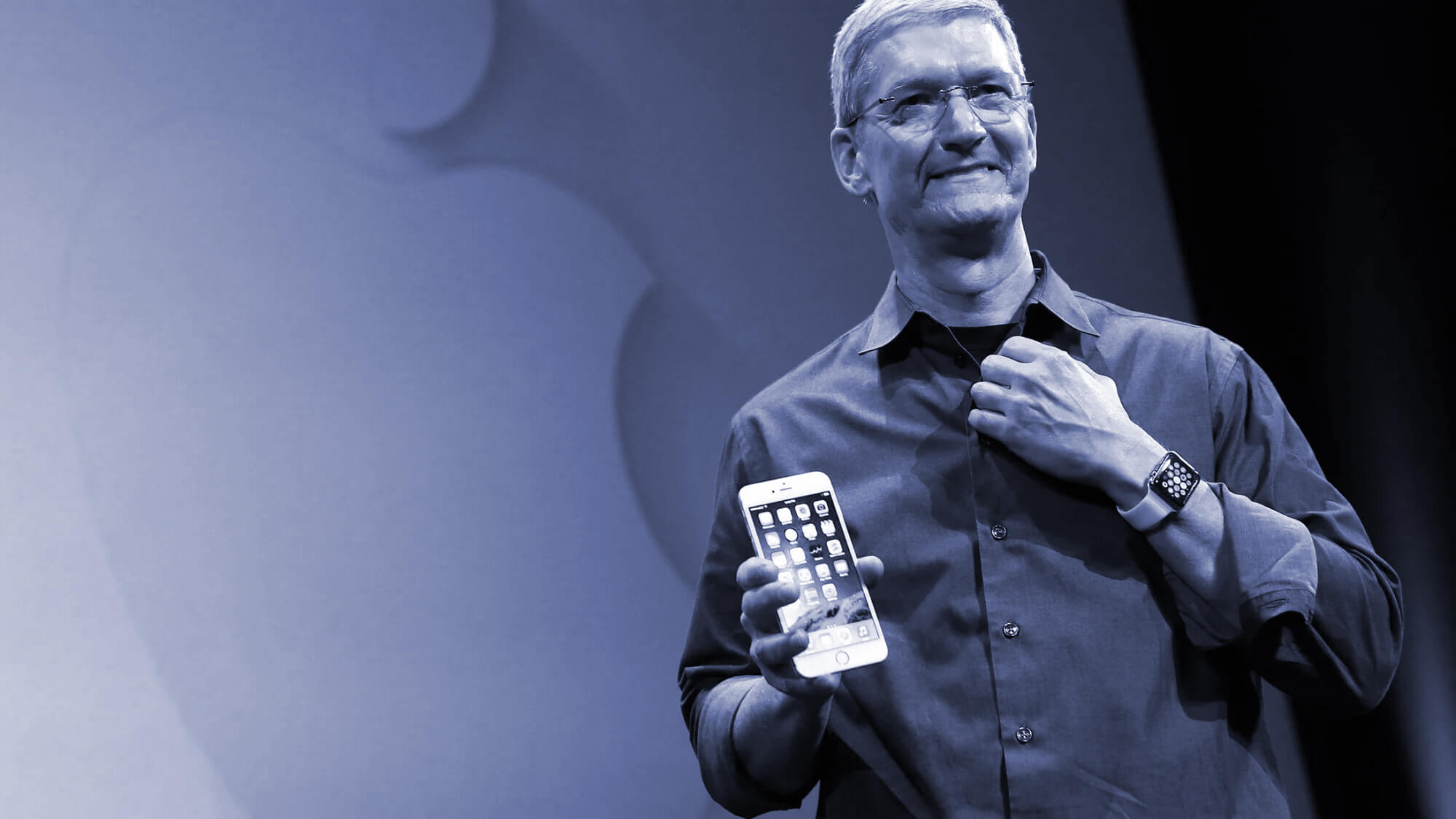
Apple has officially announced the departure of its CEO, Tim Cook, after nearly 15 years at the helm. This transition, made public on April 20th 2026 marks one of the most significant leadership changes in recent tech history.
I. A planned transition to John Ternus
According to Apple’s announcement, Tim Cook will remain in his position until September 1st 2026, before handing the reins to John Ternus, the current senior VP of hardware engineering. Cook is not leaving the company entirely: he will become executive chairman of the board, thus retaining a strategic role within Apple.
This succession is part of a long-term plan approved by the board of directors, aimed at ensuring continuity in the company’s leadership.
II. Tim Cook’s legacy
Tim Cook took over as CEO of Apple in 2011, succeeding Steve Jobs. Under his leadership, Apple has become one of the world’s most powerful companies, with a market capitalization now exceeding $4 trillion.
During his tenure, he notably:
1- Strengthened Apple’s Services (App Store, iCloud, Apple Music)
Under Tim Cook’s leadership, Apple significantly expanded its digital services business. The App Store became a central platform generating massive revenue for the company, while iCloud established itself as an essential service for storing and synchronizing user data. Apple Music, launched in 2015, also allowed the company to establish itself as a major player in music streaming, directly competing with Spotify and other platforms.
2- Consolidated Apple’s global supply chain
Tim Cook profoundly optimized Apple’s global supply chain. He strengthened relationships with suppliers, particularly in Asia, and improved the efficiency of large-scale production. This logistical mastery enabled Apple to launch its products faster and more reliably, while reducing costs and securing supply, even during global crises such as the pandemic.
3- Launched or developed flagship products like the Apple Watch and AirPods
During his tenure, Apple expanded its product ecosystem with major innovations such as the Apple Watch, which has become a benchmark in the smartwatch market, particularly for health and fitness tracking. AirPods, meanwhile, revolutionized the wireless headphone market thanks to their ease of use and seamless integration with Apple devices. These products have helped strengthen the brand’s ecosystem and diversify its revenue streams.

Apple Watch – Source Apple Magazine
III. A strategic turning point for the future
The arrival of John Ternus is seen as a choice of internal continuity. An engineer by training, he is considered a recognized expert in computer hardware, which could steer Apple toward a new phase of innovation in this area.
This change comes as Apple faces several challenges, particularly in the field of artificial intelligence, where competition is rapidly intensifying.
Indeed, Apple has faced criticism for lagging behind in the field of artificial intelligence, particularly compared to competitors like Google and OpenAI, which have taken the lead with highly effective generative models.
Apple’s strategy, heavily focused on privacy and on-device data processing, has limited the widespread use of cloud data, slowing the development of its AI systems.
As a result, Apple has not made any major breakthroughs recently in this area, with Siri remaining its primary voice assistant, often considered less advanced than its competitors.
The choice to prioritize user privacy has therefore been an advantage in terms of image, but also a factor explaining its delay in the AI race.
IV. A new chapter begins at Apple
While Tim Cook isn’t leaving the scene entirely, his departure from the CEO position symbolically marks the end of an era: that of an Apple that became a global giant thanks to a leadership focused on efficiency, stability and the development of services.
The Ternus era will officially begin in September 2026, and much is expected of Apple’s ability to accelerate its next wave of innovation.