




Flash Five #24 – Understanding Precautionary Principle
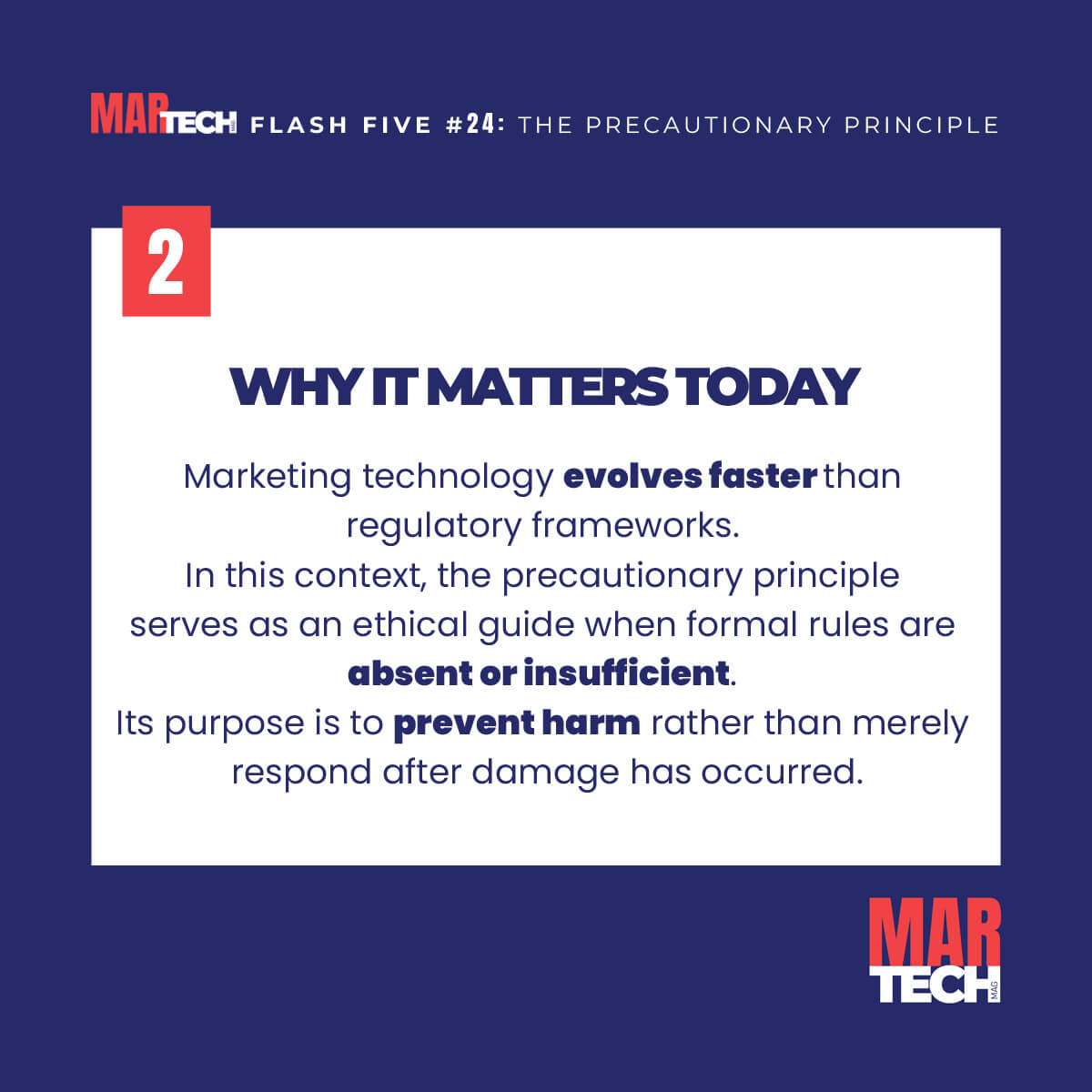
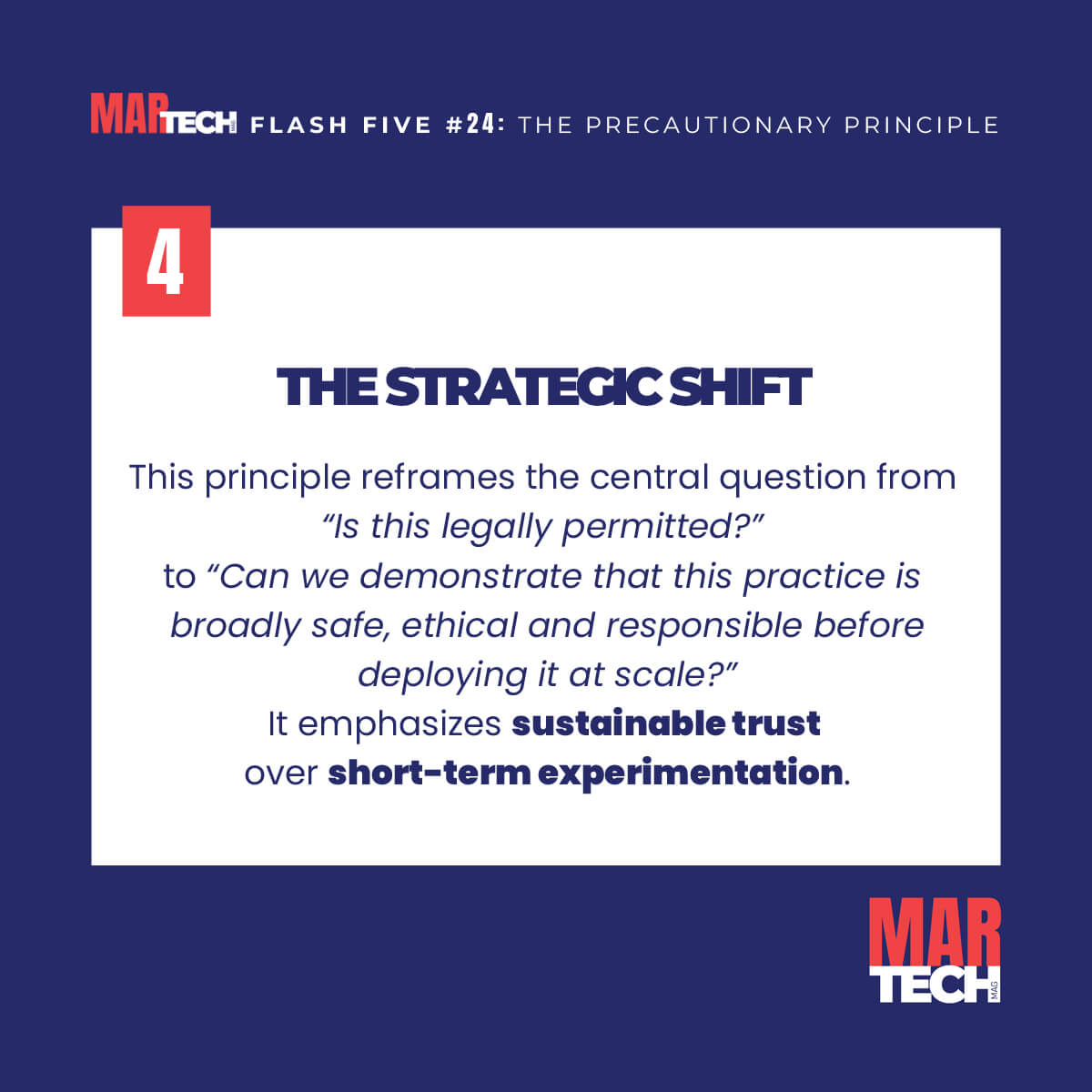
The precautionary principle, applied to marketing, refers to a strategic decision-making approach that involves anticipating reputational, regulatory, and perceptual risks before deploying a campaign, message, or brand positioning. It is an approach based on managing uncertainty rather than solely on optimizing short-term performance.
In an environment characterized by hyper-visibility of brands, volatile public opinion, and heightened sensitivity to social, cultural, and ethical issues, every marketing communication can generate negative externalities that are difficult to mitigate. The precautionary principle therefore necessitates a broader assessment of potential impacts beyond traditional media performance KPIs.
This approach involves a systemic analysis of risks: brand inconsistency, cultural dissonance, perception of greenwashing, or negative amplification on social media platforms. It relies on complex trade-offs between creative innovation, strategic risk-taking, and protecting brand equity.
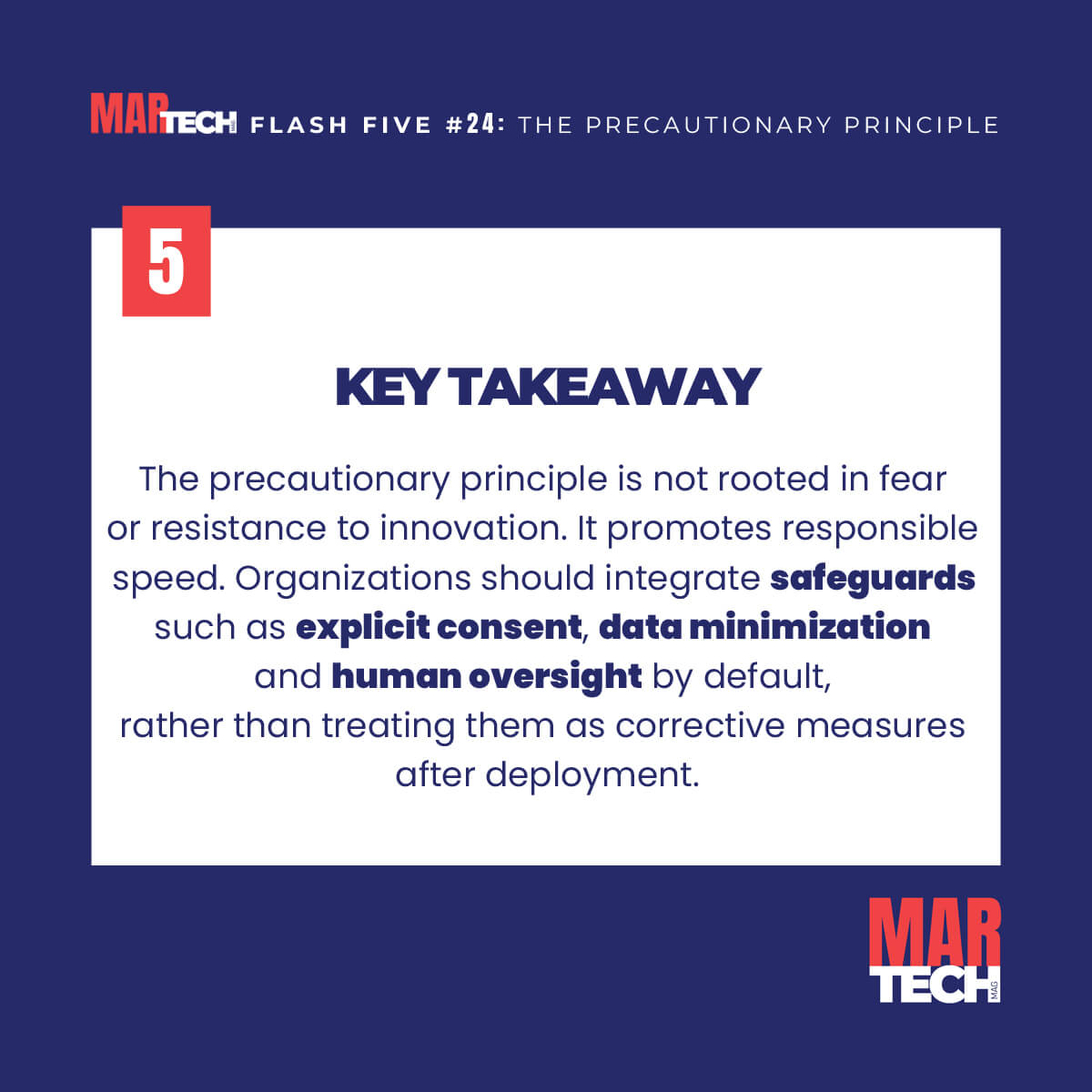
For marketing professionals, integrating the precautionary principle does not mean inhibiting creativity, but rather structuring a decision-making framework that secures long-term value creation. It is a marketing risk governance tool, essential for building sustainable and resilient brands.