





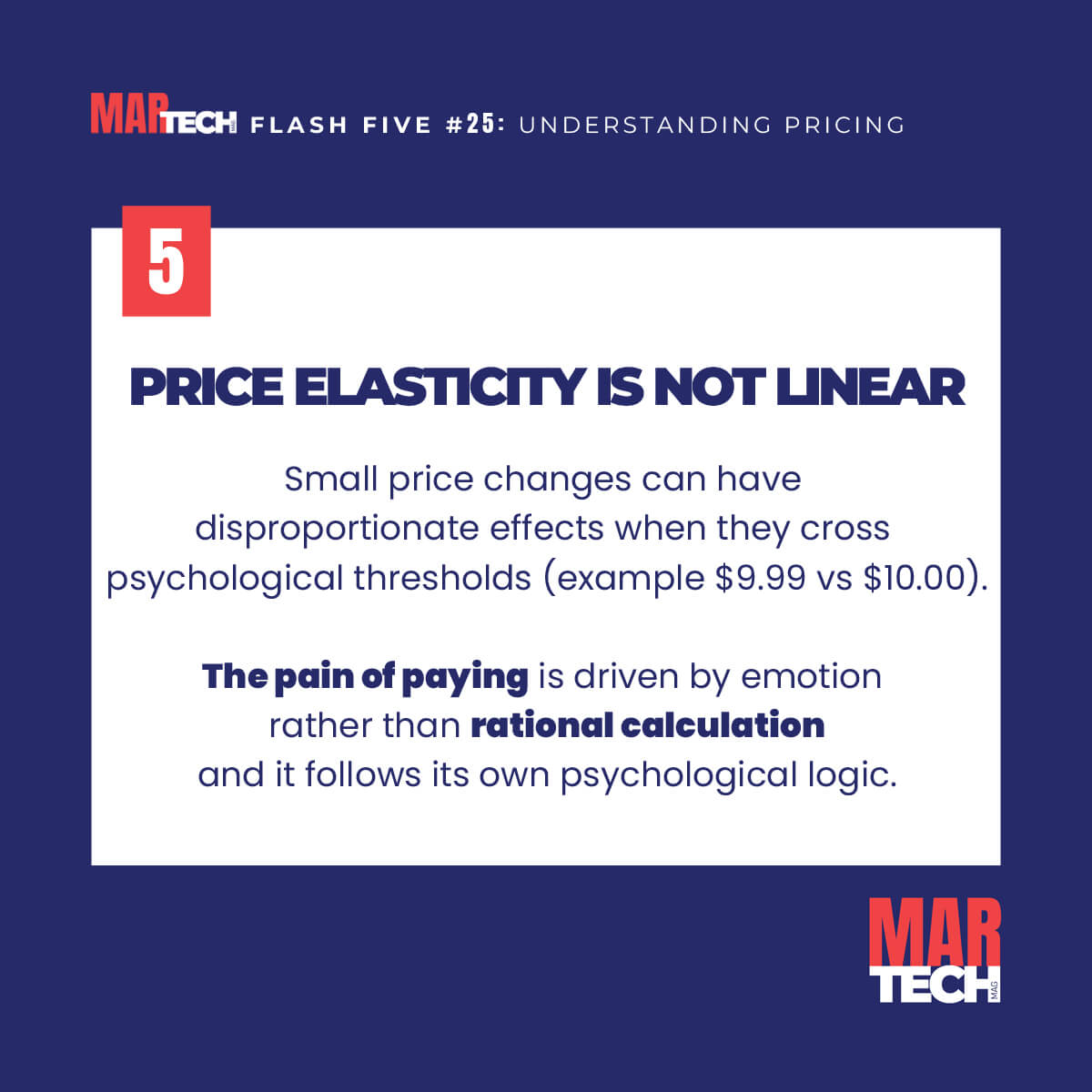

Flash Five #25 – Understanding Pricing
Pricing in marketing refers to how a company sets, structures, and justifies the price of its offerings based on the value perceived by the market. It’s not simply an economic calculation, but a strategic lever that directly influences brand perception and purchasing behavior.
Price is, first and foremost, a signal. A high price can reinforce an image of quality or exclusivity, while a low price can be interpreted as a strategy of accessibility or volume. This interpretation depends heavily on brand positioning and the competitive landscape.
Building effective pricing relies on a simple three-pronged approach: the value perceived by the customer, production costs, and competitive pressure. The challenge lies in finding a balance that aligns with the brand promise and business objectives.
In practice, pricing is also a tool for structuring the offering: it allows for customer segmentation, the organization of product ranges, and the guidance of choices (entry-level, mid-range, premium).
From a marketing perspective, managing pricing effectively means aligning perceived value, brand strategy, and long-term commercial performance.