


Flash Five #29 – Understanding Societal Marketing Concept in 5 Flashcards
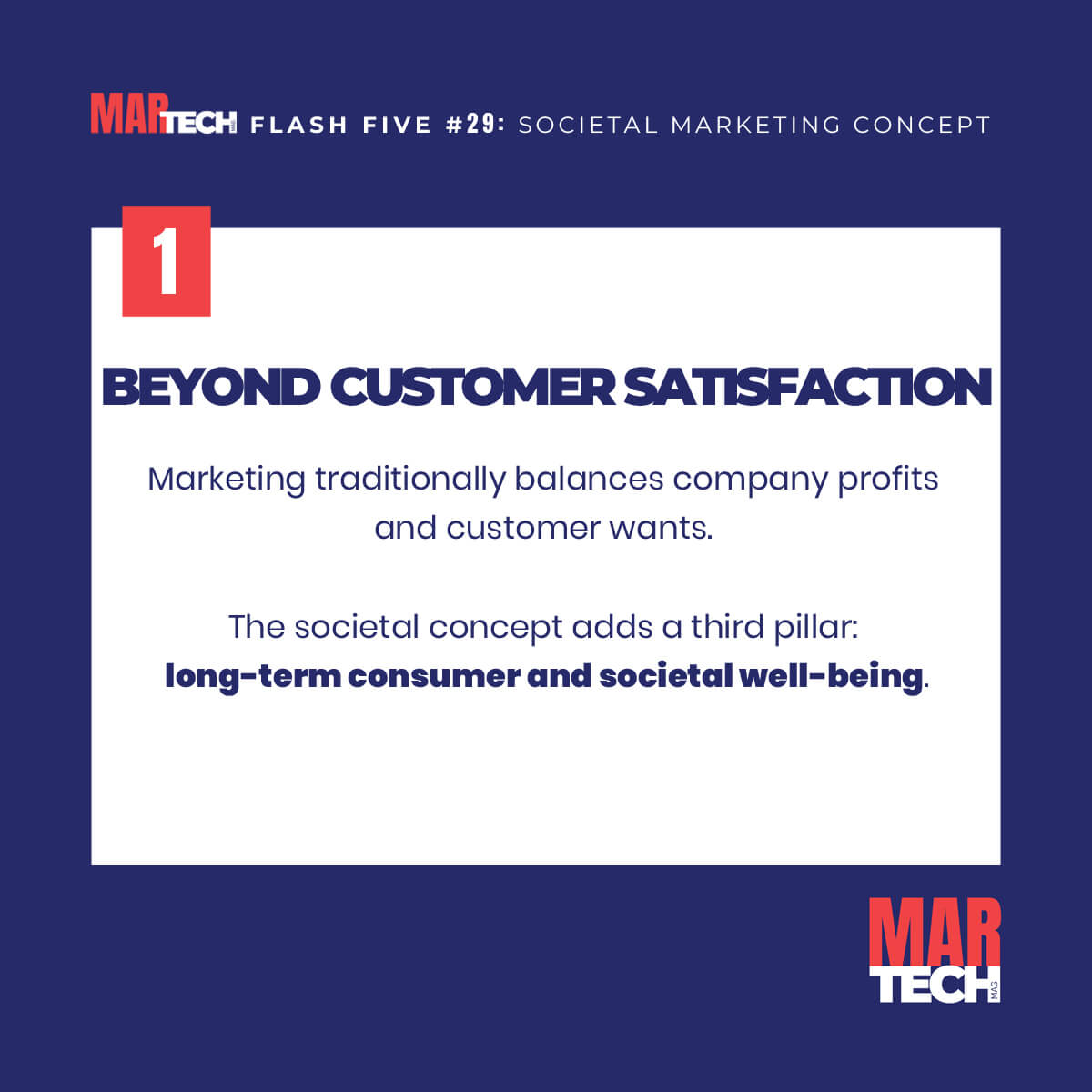
The Societal Marketing Concept holds that a company should make marketing decisions by considering not only consumer wants and company profits, but also long-term consumer and societal welfare. It adds a third pillar to a traditionally two-dimensional equation.
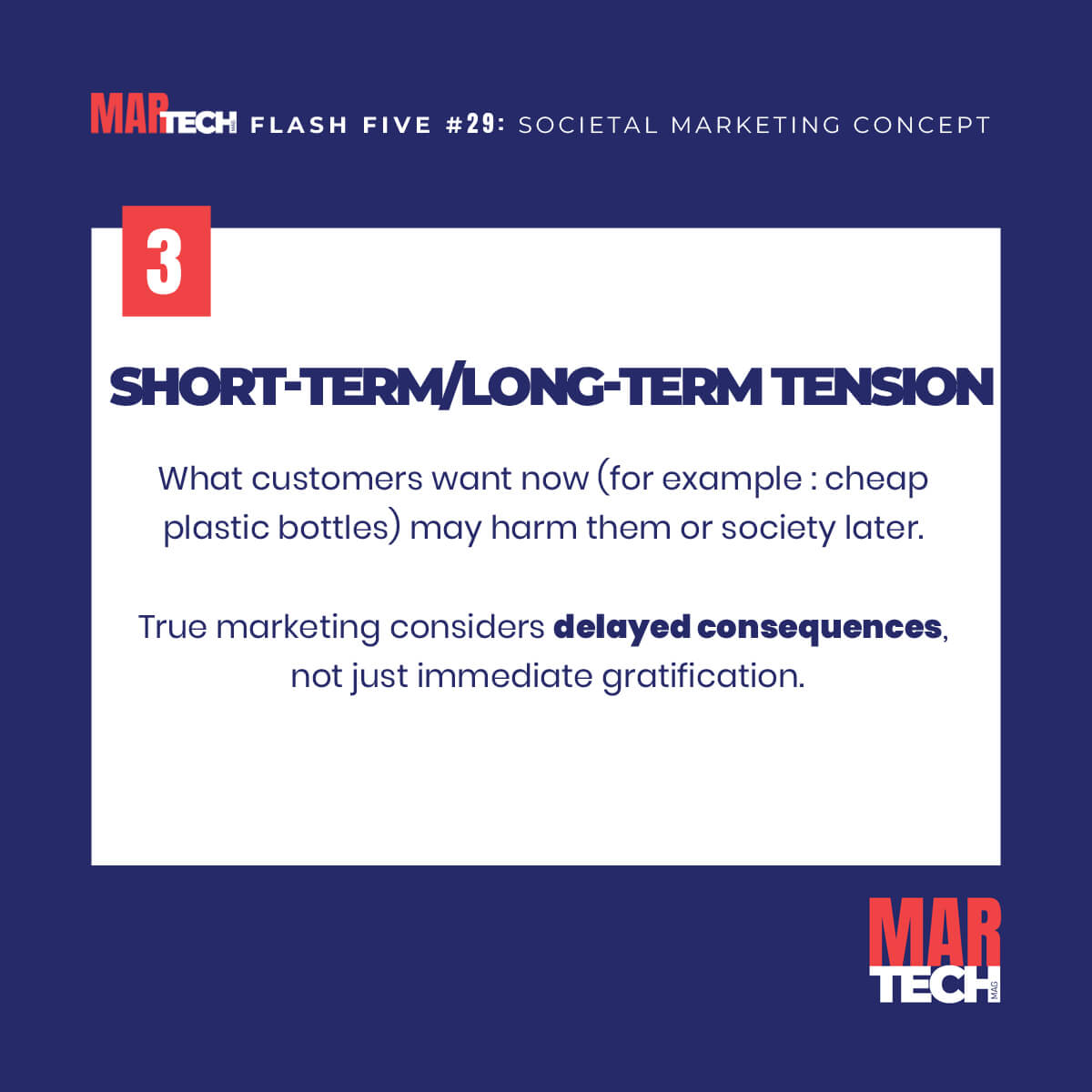
It’s NOT about charity or corporate social responsibility as an add-on. It’s a fundamental strategic orientation that recognizes something uncomfortable: what customers want right now might actually harm them or the world they live in later.
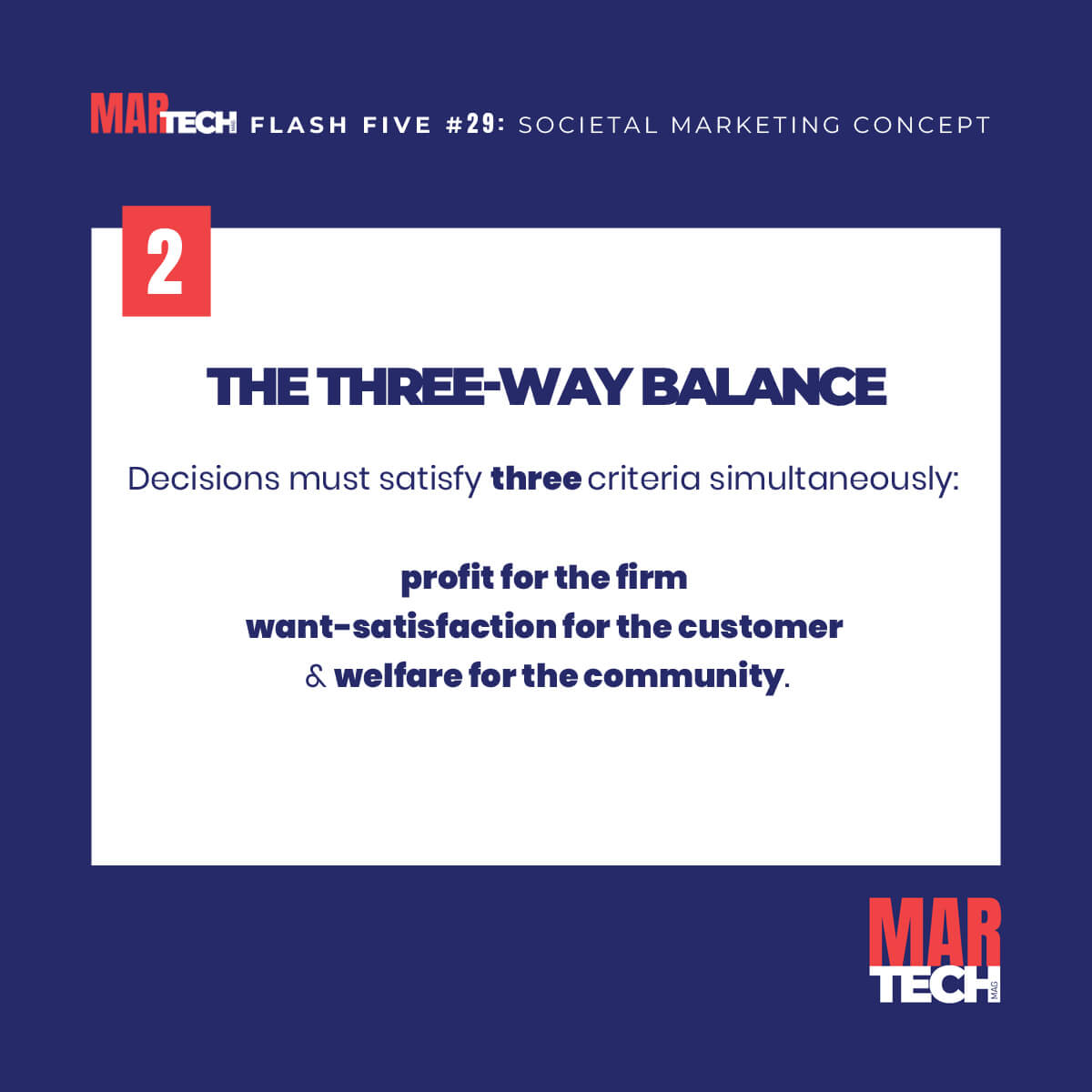
The concept operates on a three-way balance. Every decision must satisfy three criteria simultaneously: profit for the firm, want-satisfaction for the customer, and welfare for the community. Ignoring any one of these creates an unstable equilibrium that eventually collapses.
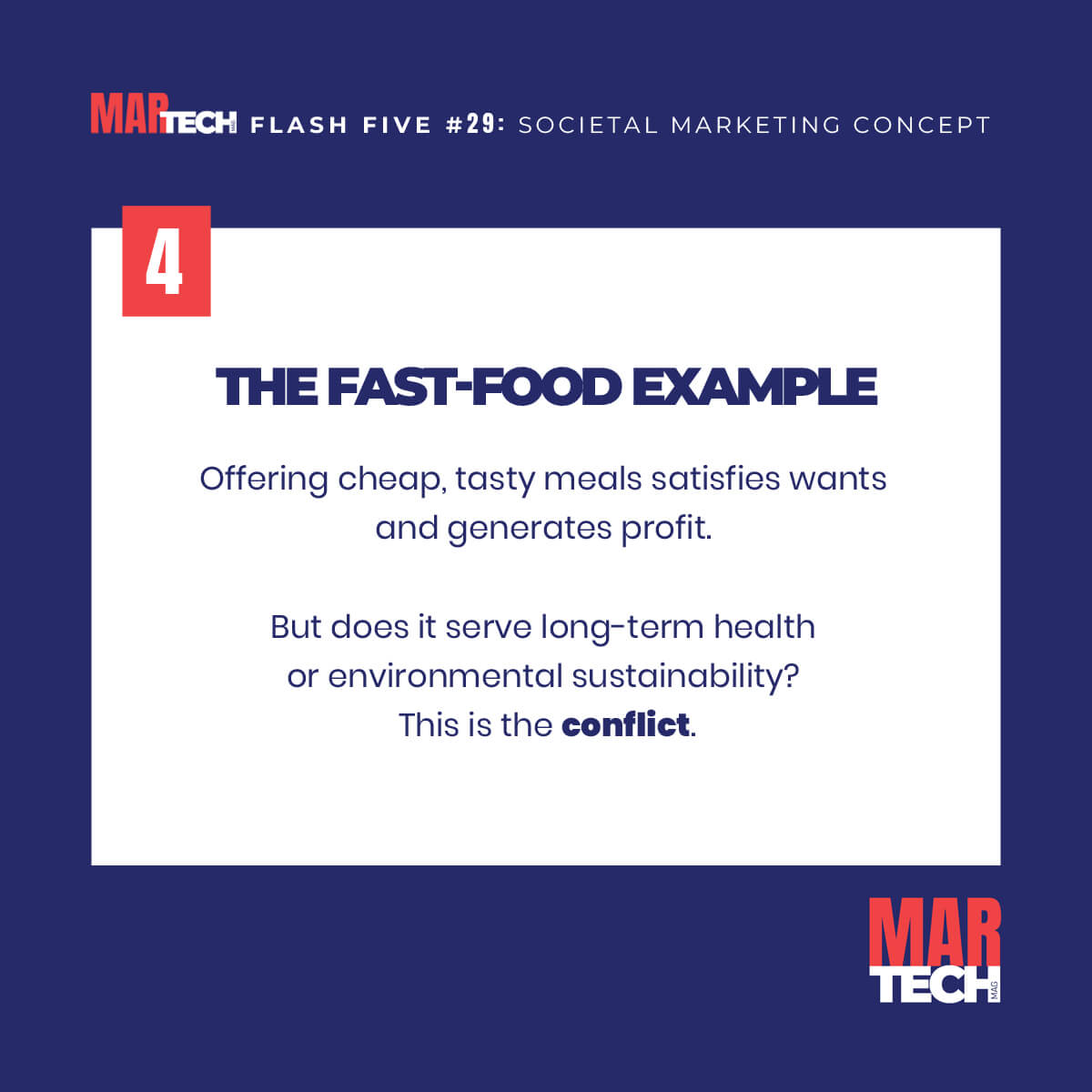
The tension is always between short-term desire and long-term consequence. Cheap fast food satisfies immediate hunger and generates profit. But does it serve the customer’s health ten years from now? Does it serve the planet? This is where the societal concept forces a strategic reckoning.
Brands that ignore societal welfare face mounting regulation, consumer backlash, talent flight, and eventual obsolescence. Sustainable marketing is not an ethical luxury. It is a strategic necessity in a world where customers, employees, and regulators are increasingly watching what brands actually do, not just what they claim.