



Flash Five #30 – Understanding Identity Resolution in Martech
Why identity resolution is the invisible backbone of modern marketing, personalization, and measurement.
Modern customers don’t interact with your brand through a single channel. They browse on their phone, click on their laptop, open emails, scroll through social media, and sometimes log in from a tablet. They use different devices, different browsers, and different identifiers.
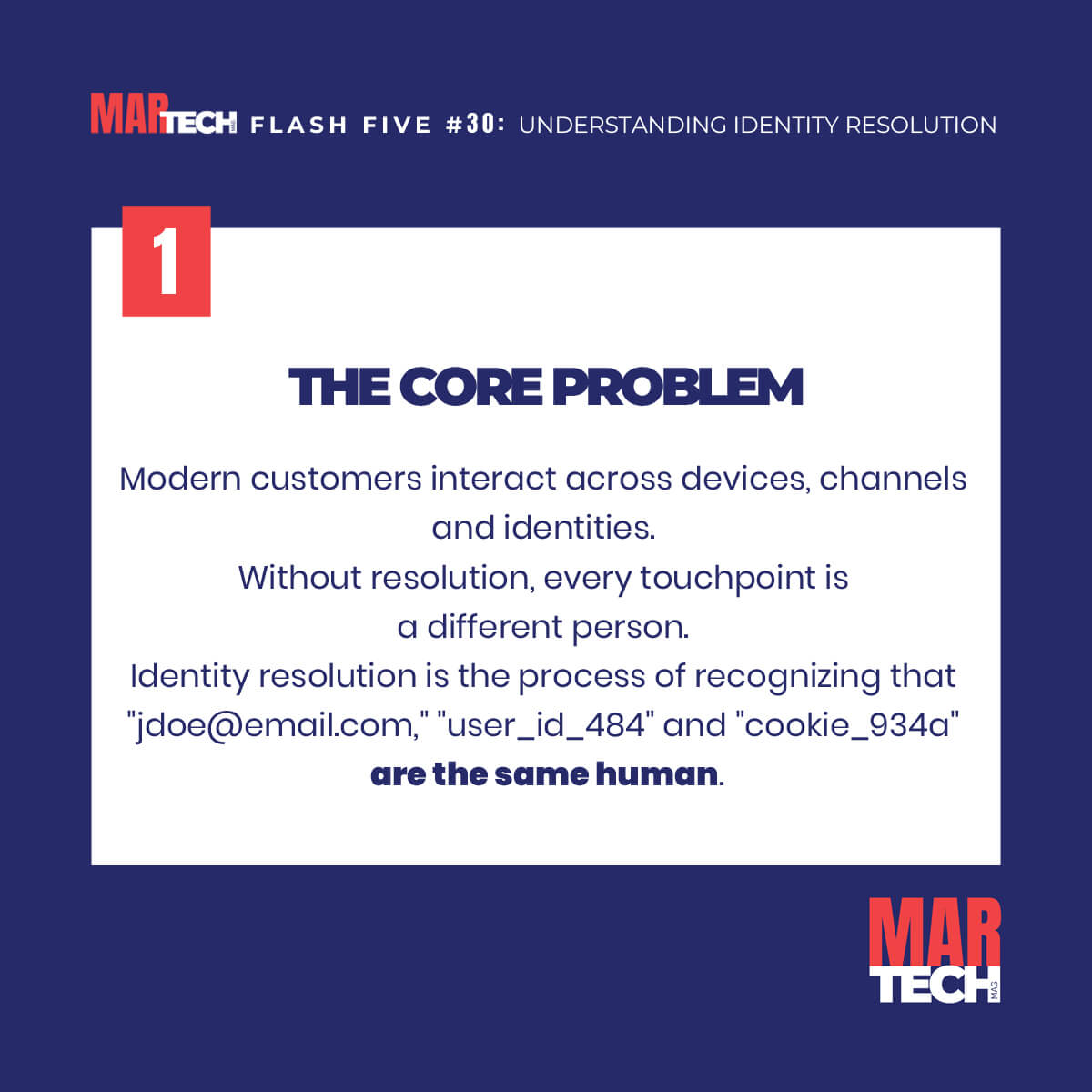
Without identity resolution, every single one of these touchpoints is a different person.
Identity resolution is the process of recognizing that multiple identifiers belong to the same human. It is the technology layer that connects fragmented signals into a coherent customer profile. It is not a feature. It is the precondition for everything modern marketing promises.
What’s inside this Flash Five:
The Core Problem: Why fragmented customer identities break personalization, attribution, and measurement.
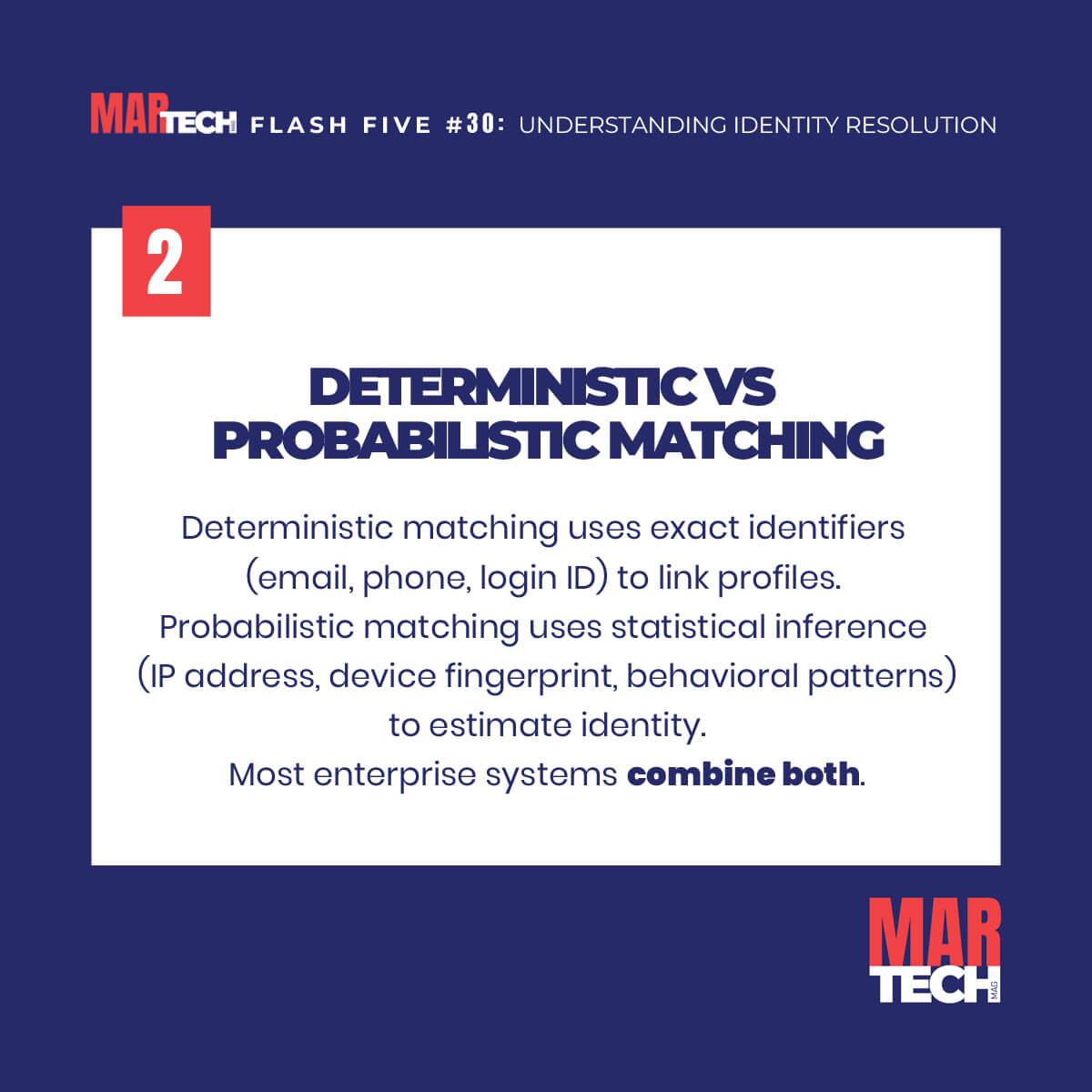
Deterministic vs Probabilistic Matching: How systems link profiles using exact identifiers or statistical inference, and why most enterprises combine both.
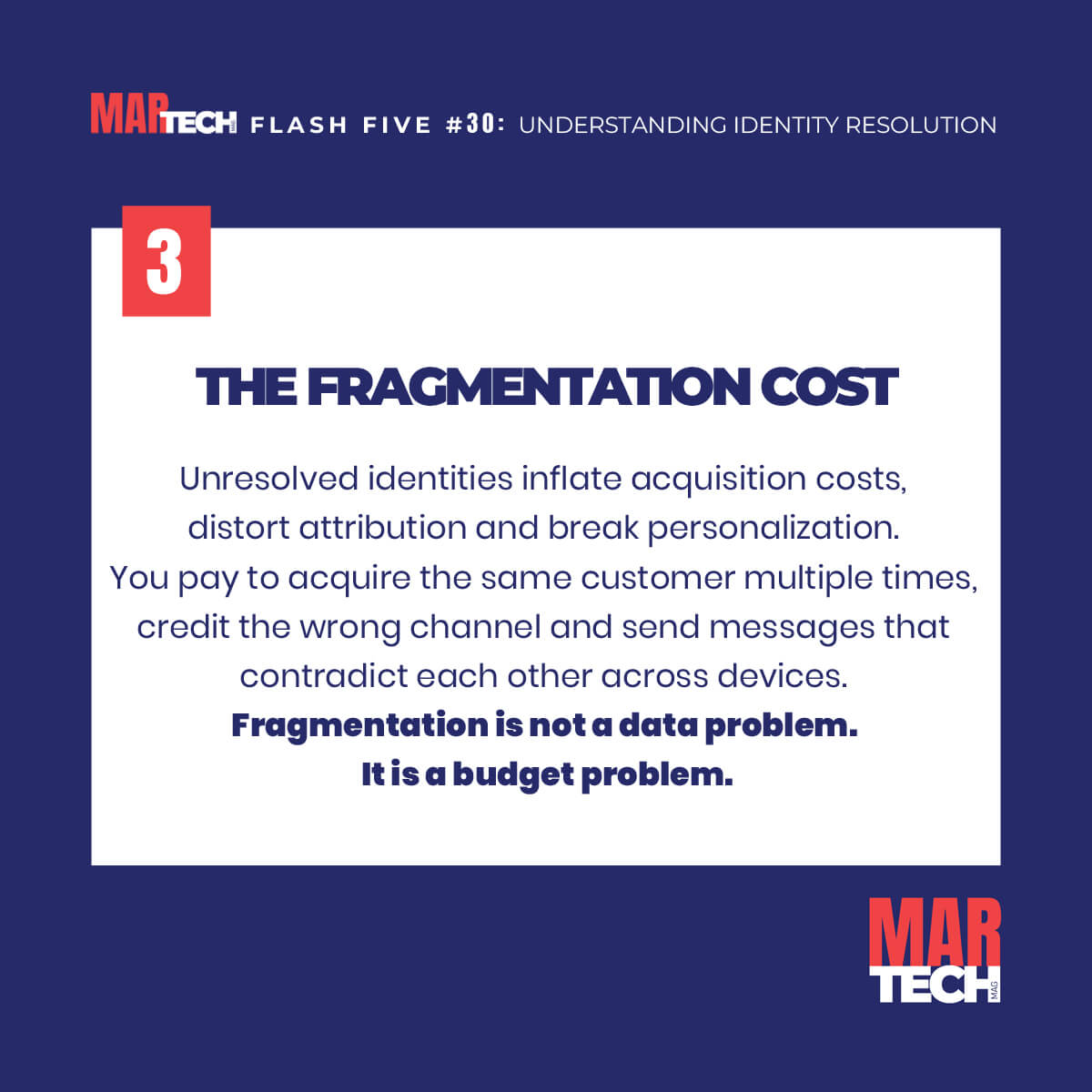
The Fragmentation Cost: How unresolved identities inflate acquisition costs, distort attribution, and create contradictory customer experiences.
The Privacy Constraint: Why third-party cookies are disappearing and how identity resolution is shifting toward authenticated, consent-based, first-party models.
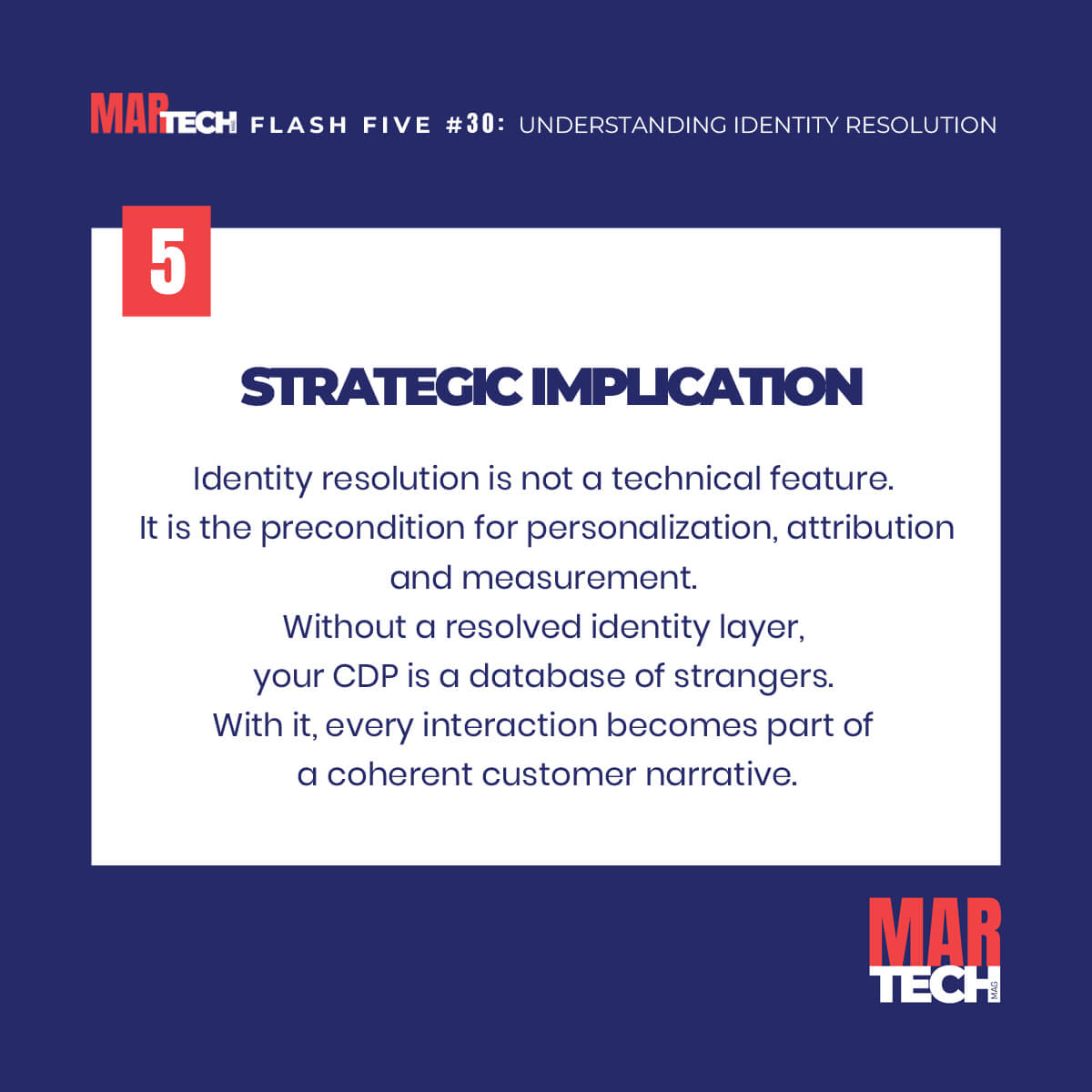
The Strategic Implication: Why identity resolution is the invisible backbone of your CDP, your personalization engine, and your entire measurement infrastructure.
Who this is for:
Marketing operations leaders, data strategists, martech architects, and growth marketers who need to understand the infrastructure behind personalization and attribution.
The key takeaway:
Without a resolved identity layer, your CDP is a database of strangers. With it, every interaction becomes part of a coherent customer narrative.